 commonsymbols.com
Proposal Workflow
Submit proposals with semantic justification, variant comparisons, and accessibility annotations to ensure robust and inclusive symbol standards.
Begin by documenting the semantic intent behind your symbol proposal—what concept, action, or state it represents—and why existing symbols do not suffice. Avoid describing only visual appearance; instead, anchor your proposal in real-world usage contexts and user needs. Include usage notes across domains like UI, print, or signage so reviewers can assess cross-disciplinary relevance and consistency.
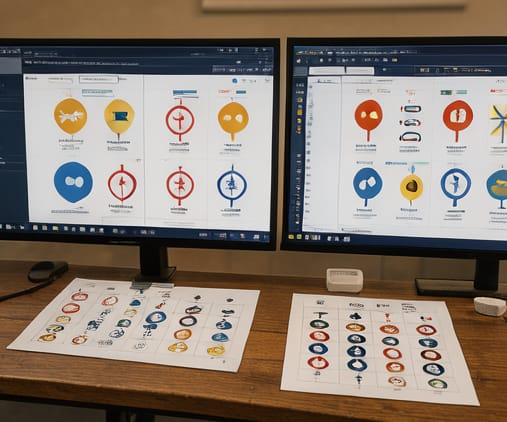
Compare at least two variant concepts visually and semantically, explaining trade-offs in recognition speed, cultural neutrality, and technical feasibility. Use simple line drawings or vector sketches if possible—detailed design mocks are not required at this stage. Highlight how each variant handles scale, color variance, and orientation to support accessibility across vision differences and low-bandwidth outputs.
Annotate your proposal with specific accessibility considerations such as contrast ratios, cognitive load cues, and screen reader suggestions. Reference established guidelines like WCAG or Section 508 where applicable, but also note any domain-specific needs—for example, symbols used in low-literacy contexts or in multilingual environments. Clear annotations help reviewers evaluate readiness and suggest improvements early.