 ittrainingcertification.com
Managing virtual machines and containers
You will be able to distinguish between virtualization layers and containerization techniques to optimize application deployment and resource utilization.
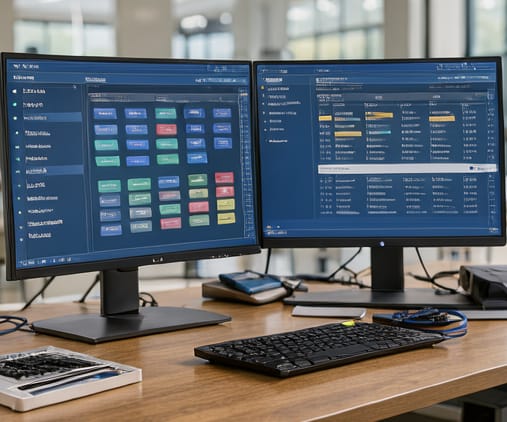
Virtual machines operate by abstracting physical hardware through a hypervisor, allowing multiple operating systems to run on a single server. Each VM includes a full operating system, which provides strong isolation but results in higher resource overhead. This method is suitable for running legacy applications or distinct security boundaries between different workloads.
Containers share the host operating system kernel, making them significantly lighter and faster to start than virtual machines. They package an application with its dependencies, ensuring consistency across development, testing, and production environments. Containers are ideal for microservices architectures where rapid scaling and efficient resource usage are critical requirements for modern applications.
Effective management requires understanding orchestration tools that automate the deployment, scaling, and management of containerized applications. Administrators must also monitor resource allocation carefully to prevent performance bottlenecks. Choosing between VMs and containers depends on the need for isolation versus efficiency, as well as the specific architectural requirements of the deployed software.
Key points
- Virtual machines offer strong isolation via hypervisors.
- Containers share kernels for faster startup times.
- Orchestration automates scaling and deployment of containers.
Next lesson: Configuring cloud storage and database services →