 petrochemicalnews.com
Coke Drum Cycle Time Improvements
Shortening transfer line fills and optimizing preheat cycles to increase drum throughput while maintaining coke quality and equipment integrity.
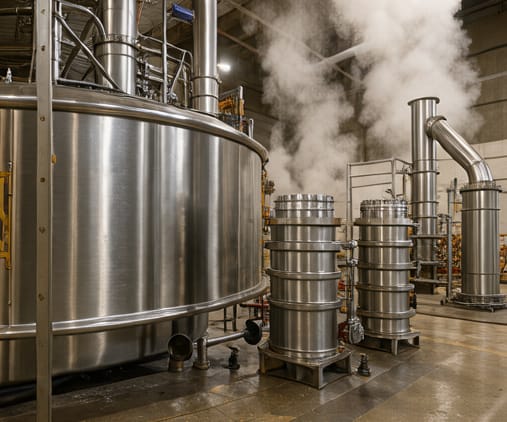
Coke drum throughput depends on how quickly a drum can complete its fill-cool-transfer-empty sequence without exceeding metallurgical limits. Operators shorten cycle time by optimizing preheat duration and temperature, ensuring consistent vapor velocities in transfer lines. Over-preheat can cause premature coking in lines, while under-preheat risks thermal shock to drums.
Feed rate ramping during fill phase is tuned to maintain stable drum pressure and level. Sudden increases can cause surge in the fractionator or uneven coke bed formation. Gradual escalation, paired with steady steam injection in the transfer line, keeps solids suspended until the drum fills uniformly, avoiding high spots or bridging.
Cooling strategies influence turnaround readiness. Sufficient time is needed to bring drum temperatures below safe entry limits, but excessive cooling adds unnecessary cycle time. Steam stripping duration is adjusted based on vapor composition to balance blowdown time with hydrocarbon recovery. Level control accuracy affects how full a drum can safely be filled.
Mechanical upkeep complements operational adjustments. Regular inspection of dome valves, transfer line elbows, and coke cutting nozzles ensures reliability. Timely replacement of worn components reduces unplanned delays. Standardizing procedures across drums in a pair helps maintain scheduling consistency and avoids operational bottlenecks.
Key takeaways
- Optimize preheat to prevent line coking
- Use gradual feed ramping for uniform filling
- Calibrate cooling and stripping for speed and safety
More in Refinery & Operations
Naphtha Cracker Efficiency Adjustments
Optimizing furnace severity, coil temperatures, and residence time to maximize ethylene yield while minimizing fouling and energy
Read more →
Hydroprocessing Unit Downtime Optimization
Reducing scheduled maintenance windows through proactive catalyst management, precise isolation procedures, and streamlined
Read more →