 petrochemicalnews.com
Hydrogenation Unit Efficiency Gains
Upgraded hydrogenation reactor internals and controlled feed preheat have demonstrably increased throughput and energy efficiency in commercial units.
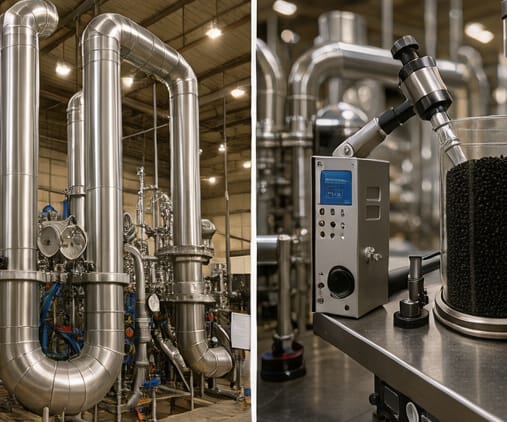
Refineries have implemented revised internal reactor structures to optimize catalyst utilization and hydraulic distribution. These changes include modular bed support systems and enhanced diffuser designs. As a result, pressure drop profiles remain stable over extended runs, enabling more uniform hydrogenation depth.
Preheat temperature control now integrates real-time feed composition feedback, reducing thermal shocks to the catalyst bed. This adaptation minimizes exotherm spikes and extends catalyst life. Thermal efficiency gains also reduce utility consumption in the heater train.
Process monitoring systems now capture hydrogen partial pressure trends alongside temperature gradients. This allows faster adjustments during feed disruptions or unit upsets. Dynamic control loops respond within minutes rather than hours, limiting yield loss during transients.
Post-upgrade benchmarks show higher conversion of unsaturates per pass, with lower hydrogen consumption per ton of feed. Product quality variability decreases significantly, easing off-spec avoidance. The improvements support tighter specification adherence without capital-intensive rerating.
Key takeaways
- Stable pressure drop and uniform catalyst utilization
- Reduced thermal stress and extended catalyst life
- Faster dynamic response and lower H2 consumption
More in Tech Watch
New Ziegler-Natta Catalyst Trials
Industrial trials of next-generation Ziegler-Natta catalysts show improved activity and stereoselectivity under standard
Read more →
Corrosion-Resistant Alloy Installations
Deployment of specialized alloys in critical process piping has reduced unplanned downtime due to degradation while extending
Read more →