 nature.tv
Sahara Dunes at Sunset
As light fades across rolling dunes, winds sculpt silica grains into ever-changing patterns, revealing how life endures and moves through one of Earth’s harshest landscapes.
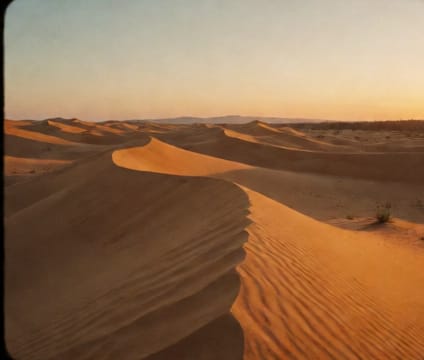
At dusk, the Sahara’s golden sands shift hue to deep orange and violet under a long-shadowed sky. Sand ripples, shaped by prevailing winds, form symmetrical wave patterns that glow as the sun dips below the horizon. These barchan dunes—crescent-shaped and mobile—migrate meters yearly, their tips pointing downwind. The wind erodes sand from their flanks and deposits it on the leeward side, constantly reshaping the terrain.
Despite the harsh conditions, life clings to the margins. Geckos dart across warm dune faces, hunting nocturnal insects. Desert foxes, with large ears radiating heat, begin foraging as temperatures drop. Plant seeds lie dormant, waiting for rare rainfall to trigger brief germination. Rodents and reptiles bury themselves in cooler sand layers, conserving moisture and energy until nightfall.
Sahara dunes form over millennia from ancient river deposits and wind transport across continental basins. The grains themselves, mostly quartz, resist weathering and accumulate where wind slows—behind rocks, vegetation, or between larger ripples. Interdune corridors host sparse shrubs, which stabilize soil and provide microhabitats. This dynamic interface between solid earth and moving air creates a constantly evolving landscape.
As darkness settles, starlight reveals the scale of the dune sea—endless ridges and valleys sculpted by time and wind. Sand fleas and beetles emerge, navigating by polarized light. Seasonal winds shift dune orientation over decades, preserving layers that document past climates in their strata. This stillness before dawn signals resilience, shaped by subtle, persistent forces.
Key takeaways
- Wind-driven migration reshapes dunes over time.
- Life adapts through behavioral and physiological strategies.
- Dune stratigraphy records paleoclimatic conditions.
More in Habitats
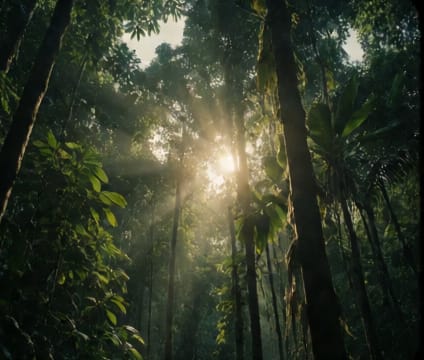
Amazon Canopy at Dawn
As light filters through towering kapok trees, the rainforest awakens with birdsong, insects, and primates moving through
Read more →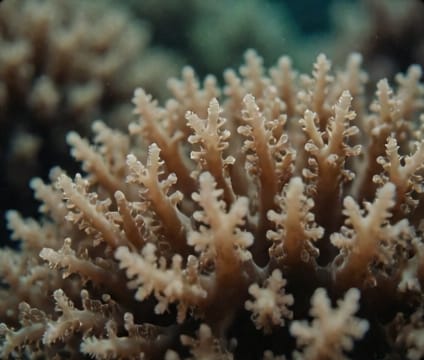
Coral Polyps in Symbiosis
Tiny soft-bodied polyps build vast reef structures through a vital partnership with microscopic algae that provides energy
Read more →