 regularperiods.com
First day of bleeding
Marking the first day of full menstrual flow begins the cycle clock and helps track cycle length and regularity.
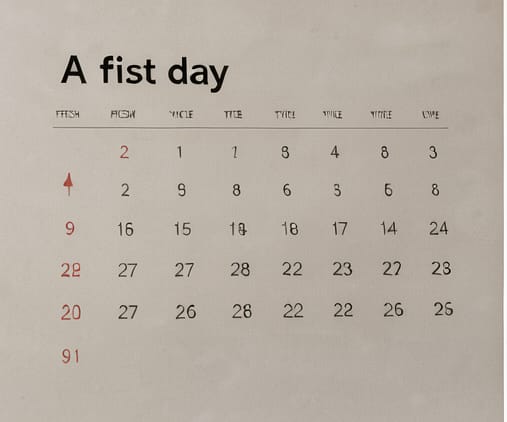
The first day of bleeding is defined as the first day of full menstrual flow, not spotting, and marks Day 1 of the current cycle. This date is essential for calculating cycle length, which is the number of days from Day 1 of one period to Day 1 of the next. Tracking this consistently over months helps identify whether cycles are regular or variable, offering insight into overall reproductive health and hormonal patterns.
Cycle regularity is influenced by many factors, including stress, illness, weight changes, and medication use. While cycle lengths can vary naturally between 21 and 35 days for many, large day-to-day shifts in cycle length, or absence of bleeding for three months or more in those who previously had regular cycles, may signal underlying hormonal or structural issues. Consistent tracking helps detect such patterns early.
The start of bleeding is also useful for timing other observations like ovulation signs or symptom changes. For those tracking fertility, knowing precisely when the cycle begins helps interpret basal body temperature and cervical mucus patterns more accurately. This information becomes more valuable with repeated entries, allowing users to recognize personal norms and deviations over time.
Practical tips
- Log only full flow days, not spotting.
- Use calendar app or journal for consistent entries.
- Note any unusual pain or flow changes.
General information, not medical advice. More on this from MedlinePlus (US National Library of Medicine).
More in Pattern Tracking
Basal body temperature
Basal body temperature is the lowest resting body temperature, typically measured first thing in the morning, and helps identify
Read more →
Cervical mucus quality
Cervical mucus changes in amount and texture throughout the cycle, offering clues about fertility and hormonal health.
Read more →